
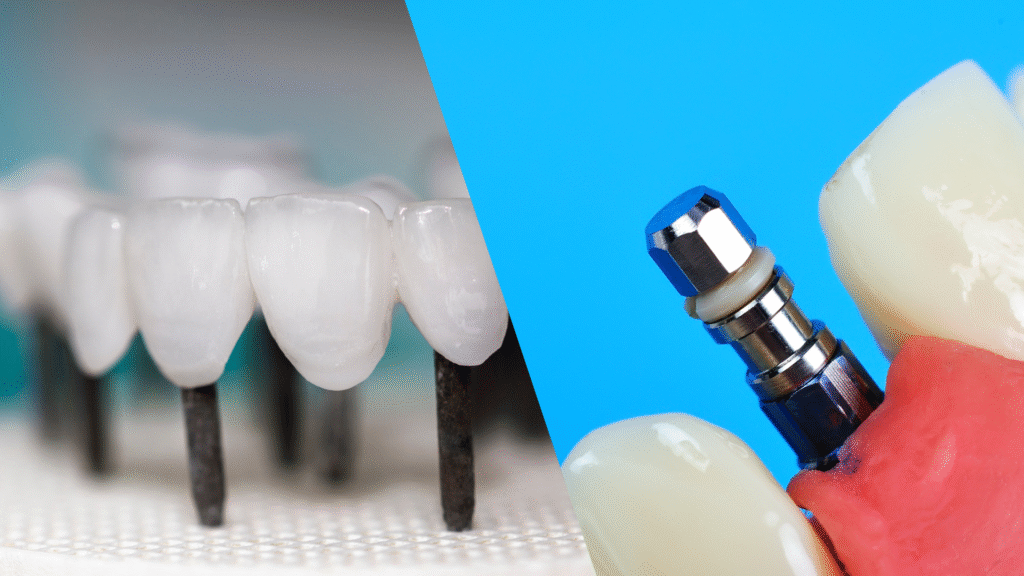
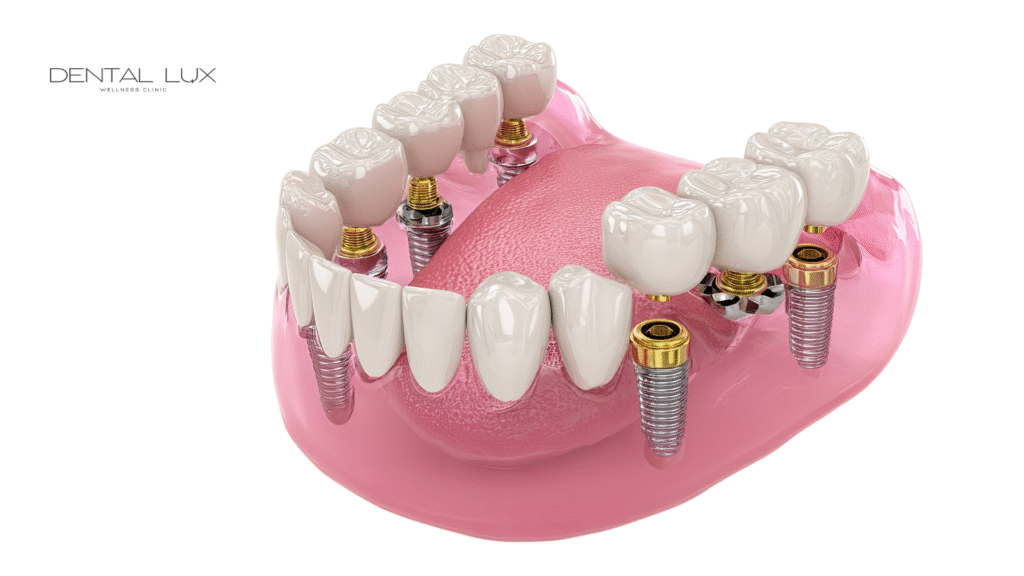
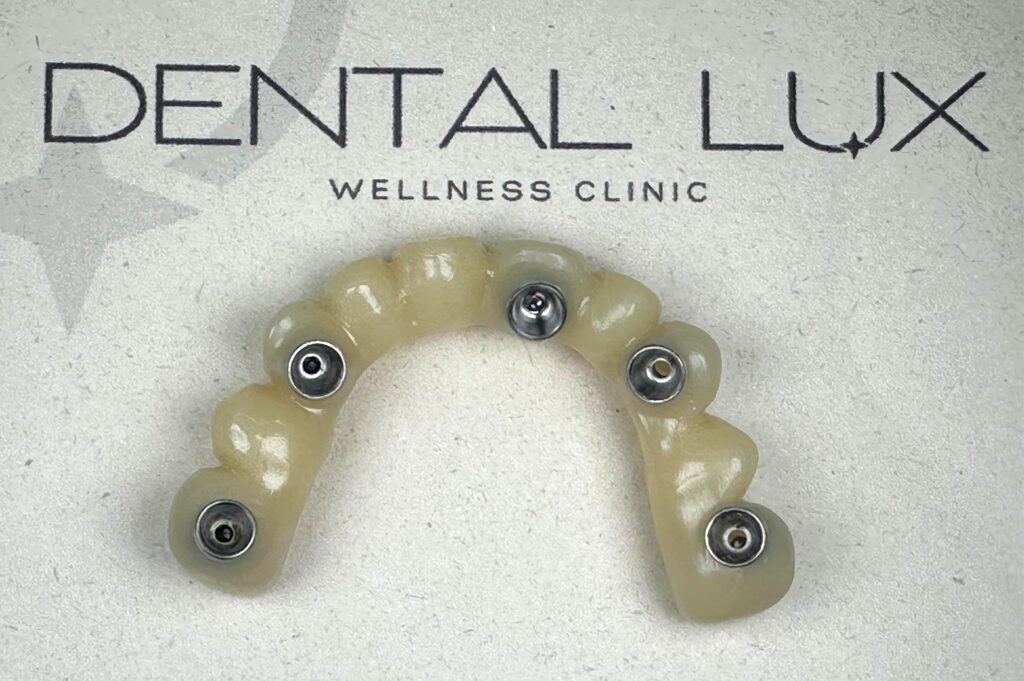

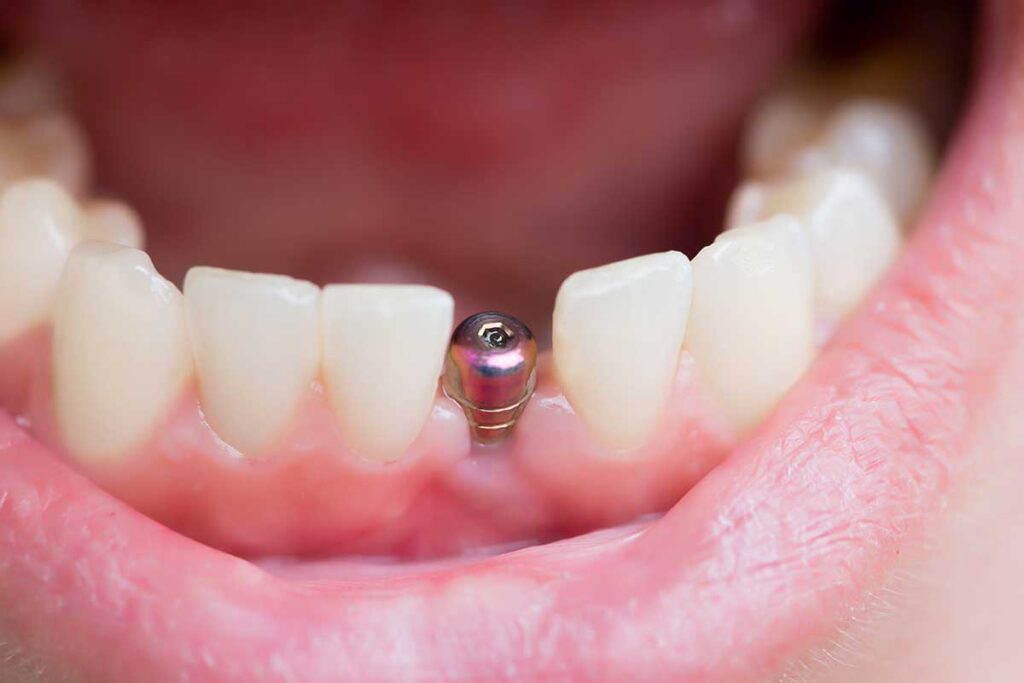

Find out which material is best for a dental implant, the differences between titanium and zirconia, their advantages, aesthetic appeal, and durability, and which one might be best for you.
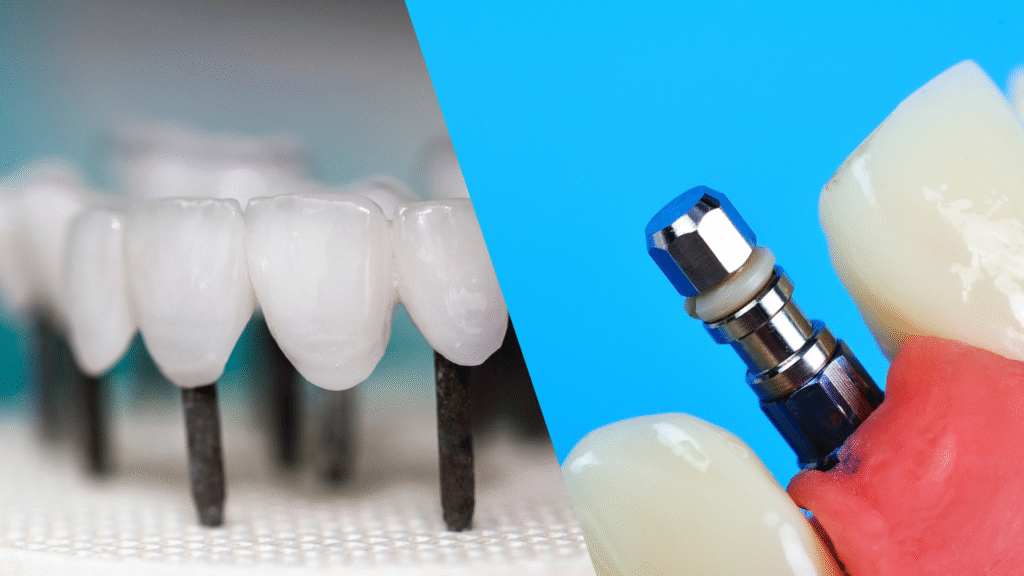
When someone decides to get a dental implant, one of the most common questions is: What is the best material for a dental implant?
Currently, titanium and zirconia dental implants are the most widely used options in modern dentistry thanks to their strength, biocompatibility, and ability to integrate with bone. However, each material has specific characteristics that may make it more suitable depending on the clinical case, the desired aesthetics, and the patient’s needs.
At Dental Lux in Cartagena, we conduct personalized evaluations to determine the best option for each smile, always prioritizing functionality, durability, and natural-looking aesthetic results.
Why is the material of a dental implant important?
The material used in a dental implant directly affects:
Bone integration.
The longevity of the treatment.
The final aesthetic appearance.
Resistance to chewing pressure.
The body’s response to the implant.
A dental implant must be able to withstand constant forces for many years without compromising the patient’s oral health or comfort. For this reason, the choice of material is a fundamental part of the treatment.
Titanium dental implants: the most widely used standard
For decades, titanium has been the most widely used material in dental implantology, and it is still considered the “gold standard” by many specialists today.
Its popularity is mainly due to its excellent osseointegration properties—that is, its ability to fuse securely and stably with the jawbone.
Advantages of Titanium Implants
High strength and durability.
Excellent integration with bone.
Extensive scientific and clinical support.
Long-term success rates exceeding 95%.
Ideal for withstanding heavy chewing forces.
Thanks to these characteristics, titanium implants are an excellent option for patients seeking a reliable and long-lasting solution.
Disadvantages of titanium
Although they are highly safe, titanium implants also come with some considerations:
Their metallic color may be visible in patients with very thin gums.
In extremely rare cases, some people may be sensitive to certain metallic components.
Even so, they remain one of the safest and most widely used options in modern dentistry.
Zirconia implants: an aesthetic, metal-free alternative
Zirconia implants have gained popularity in recent years, especially among patients seeking highly aesthetic results or who prefer metal-free treatments.
Zirconia is an advanced white ceramic that closely matches the natural shade of teeth, offering a highly aesthetic appearance, especially in the front of the smile.
Advantages of zirconia implants
A white color similar to that of natural teeth.
Excellent dental aesthetics.
Metal-free material.
Very good biocompatibility.
Lower risk of the implant being visible through the gums.
For these reasons, many people consider zirconia an ideal option for achieving more natural-looking results.
Disadvantages of zirconium
It may be less resistant to extreme impacts compared to titanium.
It has a shorter history of clinical studies.
In some specific cases, it is not the first choice for areas subject to high chewing pressure.
Despite this, technological advances have significantly improved the strength and predictability of zirconia implants.
Titanium vs. Zirconium: Key Differences
| Feature | Titanium | Zirconium |
| Durability | Very high | High |
| Appearance | Good | Excellent |
| Color | Metallic gray | White |
| Medical history | Very extensive | Most recent |
| Mechanical strength | Excellent | Very good |
| Metal-free material | No | Yes |
| Osseointegration | Excellent | Excellent |
So, what is the best material for a dental implant?
The reality is that there is no single “perfect” material for all patients.
Titanium remains the most widely used and recommended option due to its strength, durability, and proven clinical success over decades.
However, zirconia can be an excellent alternative for people who prioritize aesthetics, have thin gums, or prefer to avoid metallic materials.
The best choice will depend on factors such as:
The quality and quantity of available bone.
The location of the implant.
The patient’s aesthetic needs.
Bite force.
Medical and dental history.
The specialist’s recommendations.
Therefore, a professional evaluation is essential before making a decision.
What materials do we use at Dental Lux?
At Dental Lux, we use high-quality materials and advanced technology to provide safe, functional, and aesthetically natural treatments.
Our team conducts a personalized evaluation of each patient to determine which type of dental implant will provide the best long-term results, taking into account functional, anatomical, and aesthetic factors.
In addition, we utilize digital planning and specialized diagnostics to provide more precise and predictable treatments, especially for patients who travel to Cartagena seeking premium dental solutions.
Frequently Asked Questions About Dental Implant Materials
Are titanium implants safe?
Yes. Titanium implants have decades of scientific backing and are considered highly safe and biocompatible.
Do zirconia implants last shorter?
Not necessarily. Although they have been studied in clinical trials for a shorter period of time compared to titanium, zirconia implants have shown excellent results and durability.
Which dental implant looks the most natural?
Zirconia typically provides a more natural appearance due to its white color, especially in patients with thin gums.
Can the body reject a dental implant?
Rejection is rare. Most modern implants are designed using biocompatible materials that allow for proper integration with the bone.
Which is more expensive: titanium or zirconium?
In many cases, zirconia implants can be more expensive due to their aesthetic properties and manufacturing processes.
If you are considering a dental implant and want to know which option is best for you, at Dental Lux we can help you with a personalized assessment and advanced technology to achieve functional, long-lasting, and natural-looking results.